Citizen Kane is widely cited as one of the best American movies, so I figured it was time to check it out. Here are my rambling thoughts on the film. I don’t spoil anything significant, so you may read without fear. Enjoy!
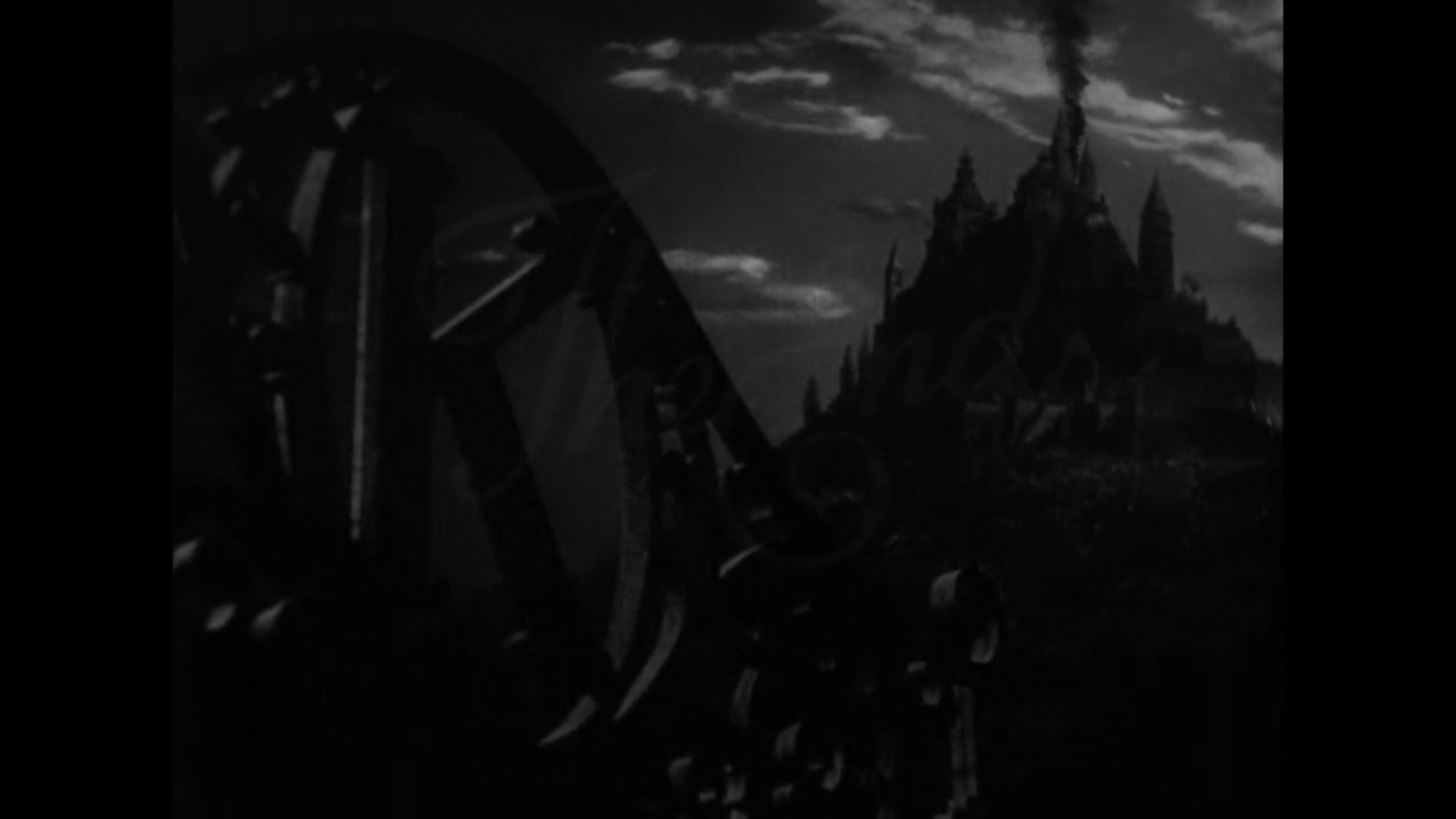
The film begins by showing the grand mansion of Charles Foster Kane: once the most powerful newspaper publisher in America, he recently died alone with his power significantly diminished. From the very beginning, I was struck by the opulence of Kane’s lifestyle; a mansion that was compared to Kublai Khan’s Xanadu, a huge statue collection, and two failed marriages to trophy wives. All this wealth, yet even without seeing the man, I got a sense that he wasn’t really happy when he died. Despite the amount of money poured into its design, Kane’s pleasure palace looks more like a scene out of Dracula than a place for fun.
The visuals are amazing from the very beginning; there’s some kind of overlay of multiple shots that is disorienting and aesthetically pleasing at the same time. We see a variety of scenes superimposed over a shot of Kane’s mansion as the credits roll; for 1941, this is incredible film editing and, even today, one of the more interesting ways a film has grabbed people’s attention during the credits.
After this media tycoon’s death, the writers at his newspaper The New York Inquirer decide to write an obituary for him. However, they are flummoxed by the meaning of his last words – “Rosebud.” To decipher this enigma, the journalists read old diaries, interview Kane’s old friends, and dig into his little-known past.
The story is thus presented through flashbacks, beginning with his early childhood in a middle-class family and showing how the discovery of gold on his family’s property launches him into the upper class. He is raised under a bank’s supervision and grows up without discipline or a strong value system – essentially a playboy millionaire. Lacking any ambition in life, he is uninterested in most of the businesses the bank manages under his name, except for the New York Inquirer newspaper, thinking “it would be fun to run a newspaper.”
The newspaper, however, ends up being more than fun: it brings Charlie tremendous power, allowing him to swing elections and even start wars according to his whims. This part of the film tackles a theme still relevant today: sensationalist reporting and the power of media.
In 1941, this topic was a hot issue because of the recent Spanish-American war. For those unfamiliar with this bit of history, the Spanish-American War was a brief conflict between Spain and the US that resulted in over 50,000 casualties (almost all Spanish) and the ceding of Spain’s last colonies to the United States. The war was provoked by the sinking of a US ship in Havana under suspicious circumstances. To this date, there is no consensus on what caused an explosion onboard the ship, but at the time, sensationalist reporting popularized the theory that the Spanish navy was responsible for the explosion. The sensationalist reporting of the time was given the name “yellow journalism” – its usage is infrequent today, but at the time, it was a well-known term. Yellow journalism played a large part in provoking the Spanish-American War, swaying public opinion in favor of war with very little evidence to back up the newspaper headlines.
Citizen Kane looks at events like this from the perspective of the powerful men running newspapers. What’s remarkable is the nonchalance with which Kane makes decisions that can result in tens of thousands of deaths. The film makes the subject of its critique clear, explicitly referring to the Spanish-American war and the role newspapers played in its start:
Bernstein: There is no war in Cuba. Signed Wheeler. Any answer?
Kane: Dear Wheeler, you provide the prose poems, I’ll provide the war.
The film deserves praise for highlighting, as early as 1941, the dangers of media consolidation and sensationalist reporting. Citizen Kane’s message has only grown more important with time. In Italy, we may look at the example of Berlusconi if we wish to see the continuity of this trend; Berlusconi used his control of the Italian media to cement his power and prevent criticism of his policies from reaching the public. In the United States, we can see a similar situation in the Murdoch family and the poisoning of Republican politics by FOX News.
Charles Foster Kane used sensationalist reporting to provoke public outrage when desired, and when he wished to shut off the public’s mind and keep people passive, he would shift focus to murder cases and gossip. This is the same thing that media outlets do today – e.g. FOX (US), JoongAng (South Korea), or Times of India. Want to create a wave of hatred towards Muslims in India? Sensationalize individual cases of Muslims committing crimes and use violent, hyperbolic rhetoric. Want people to ignore the slow death of democracy in India and continue voting BJP? Push headlines like “housewife murders husband and puts him in freezer” and don’t mention press freedom, economic disparity, or any actual issues in your newspaper. If you don’t talk about it, people will slowly forget it’s an issue.
Citizen Kane is an amazing movie because it brings attention to critical issues in our society: turns out that we haven’t learnt much from our failures pre-1941. The movie creates a dark representation of media consolidation and yellow journalism, with a warning just as effective today as it was in 1941.
It’s doubly interesting because it focuses on the powerful men responsible for this destruction, rather than the destruction itself. Citizen Kane is, in many ways, a psychological film. We’re led to ask the question: “what kind of man knowingly chooses to abuse power on such a scale and with such devastating impact?” Kane’s character is a prototype for all the villains of modern society: Elon Musk, Mark Zuckerberg, and other playboy millionaires whose immaturity puts our future at risk. If you want to understand our current problems and the men responsible for them – Citizen Kane is the movie for you.
Many films have attempted this critique of “the lives of the wealthy and powerful” and examined the playboy millionaire psyche, but very few achieve the balance and impact of Citizen Kane. The film isn’t over-the-top like many satirical films on this topic are. This movie is the most accurate depiction I’ve seen so far of the megalomania and lust for power that drives men like Elon Musk or Silvio Berlusconi.
Kane feels that he deserves the people’s love and exhibits the messiah complex common among today’s politicians and media tycoons. His happiness comes from his sense of power, and this dependence drives him to become increasingly malicious with his news reporting. Exercising power is the only thing that makes him feel alive.
Especially significant is this exchange midway through the film:
Emily: Really, Charles, people will think…
Kane: What I tell them to think.
(The sharp sound of Kane putting down his coffee cup punctuates his comment.)
Leaving aside the depiction of media tycoons specifically, the movie does a fantastic job of criticizing the behavior of the rich and famous men of America. The movie calls out billionaires’ practice of marrying “trophy wives,” long before the term was even in usage. Kane marries famous women who can boost his reputation, but he cares little for them, and both his marriages fail. His wives endure the neglect and disrespect up until their patience expires, leading to conversations such as this one
Kane: Whatever I do, I do because I love you.
Susan: You don’t love me! You want me to love you – sure – I’m Charles Foster Kane. Whatever you want – just name it and it’s yours! But you gotta love me!
The film accurately portrays all the worst aspects of billionaires’ behavior: trophy wives, opulent lifestyles, and a pathological obsession with image.
In search of admiration and status, Kane collects statues, builds a giant mansion, and marries the most “cultured” women he can find – yet he cares little for his statues, his mansion, or his wives. He is plagued by loneliness and lives in denial of his problems. This 1941 critique of wealthy men’s behavior and psychology has stood the test of time: billionaires today act almost the same way Kane did. Orson Welles’ brilliant acting makes you hate the character of Kane as if he were Musk or Zuckerberg right in front of your eyes.
Yet at the same time, the film induces pity for Kane at the end. We briefly see his childhood at the beginning of the film; here, he is innocent, cares little for money or power, and seems to enjoy life. Comparing this happy child to the dark and lonely figure at the film’s end causes us to reflect on how wealth and power can change a man. His descent into madness isn’t rapid, but rather occurs slowly throughout the movie until it suddenly strikes us – “oh wow he’s evil.” The death of happiness, idealism, and morality in Kane is gradual, allowing us to appreciate the scale of the tragedy and view the film as a cautionary tale. Money, power, and influence are great things to have, but on their own, they can’t bring true happiness and, instead, will often make you a worse person.
In addition to the brilliant scriptwriting, acting, and plot that lets Citizen Kane tackle such heavy topics, the editing and cinematography of this film were crucial to its impact. The lighting is used to highlight the dark, murky nature of Kane’s past; as a reporter sits in a hall discussing secret memoirs of Kane’s friends, the only light comes from a small window above him, creating the haunting effect shown below. Lighting is effectively used throughout the film to characterize characters, places, and scenes; Kane is shrouded in secrecy and backdoors politicking, and the film uses lighting to subtly build this atmosphere.
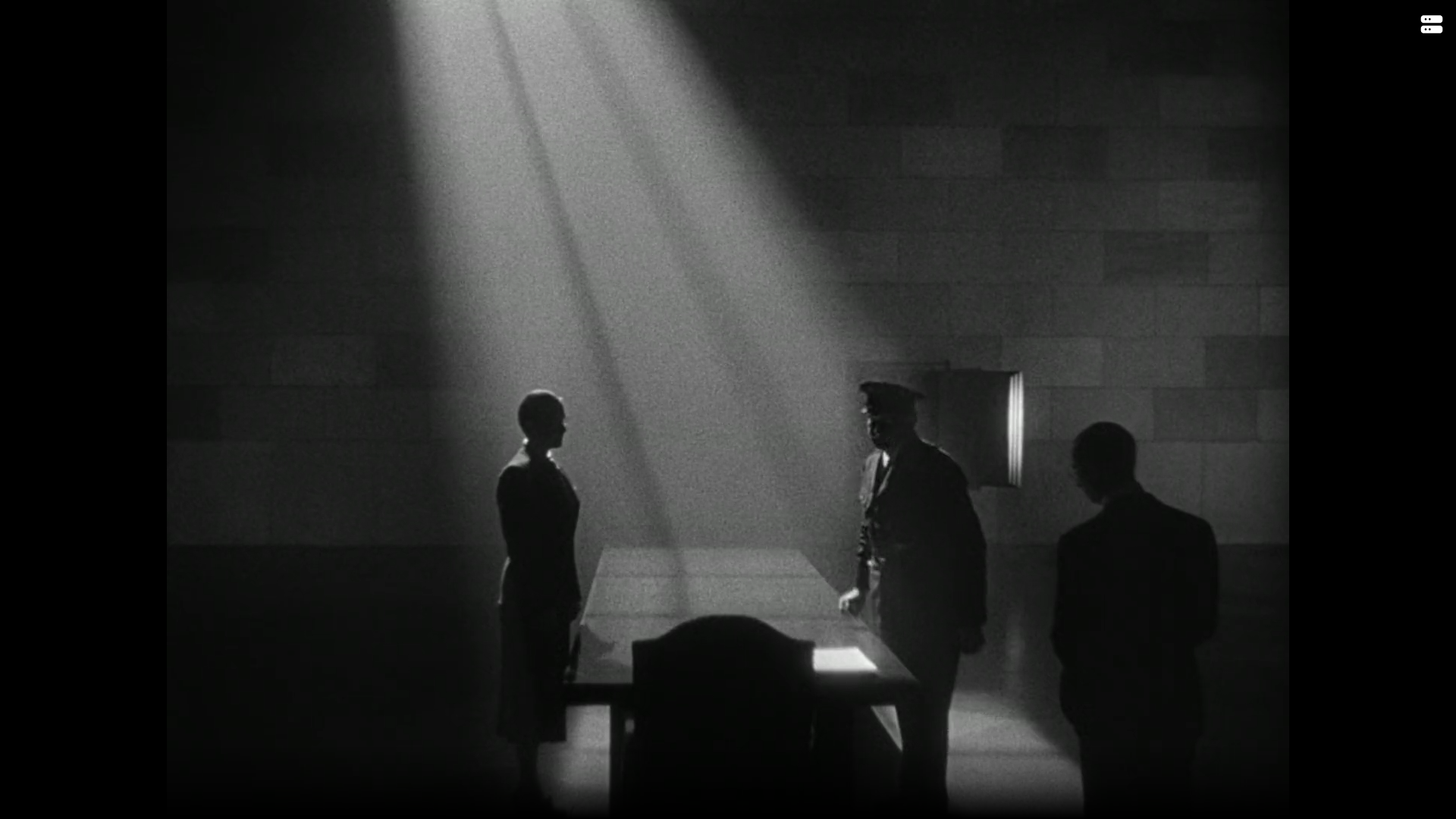
The mark of a good film is that it uses not only dialogue but also visuals to tell a story – Citizen Kane does this spectacularly. Kane casts a long shadow wherever he goes, and he is hopelessly alone in his mansion. The visuals of this movie brilliantly capture this image, making Citizen Kane a top tier film.
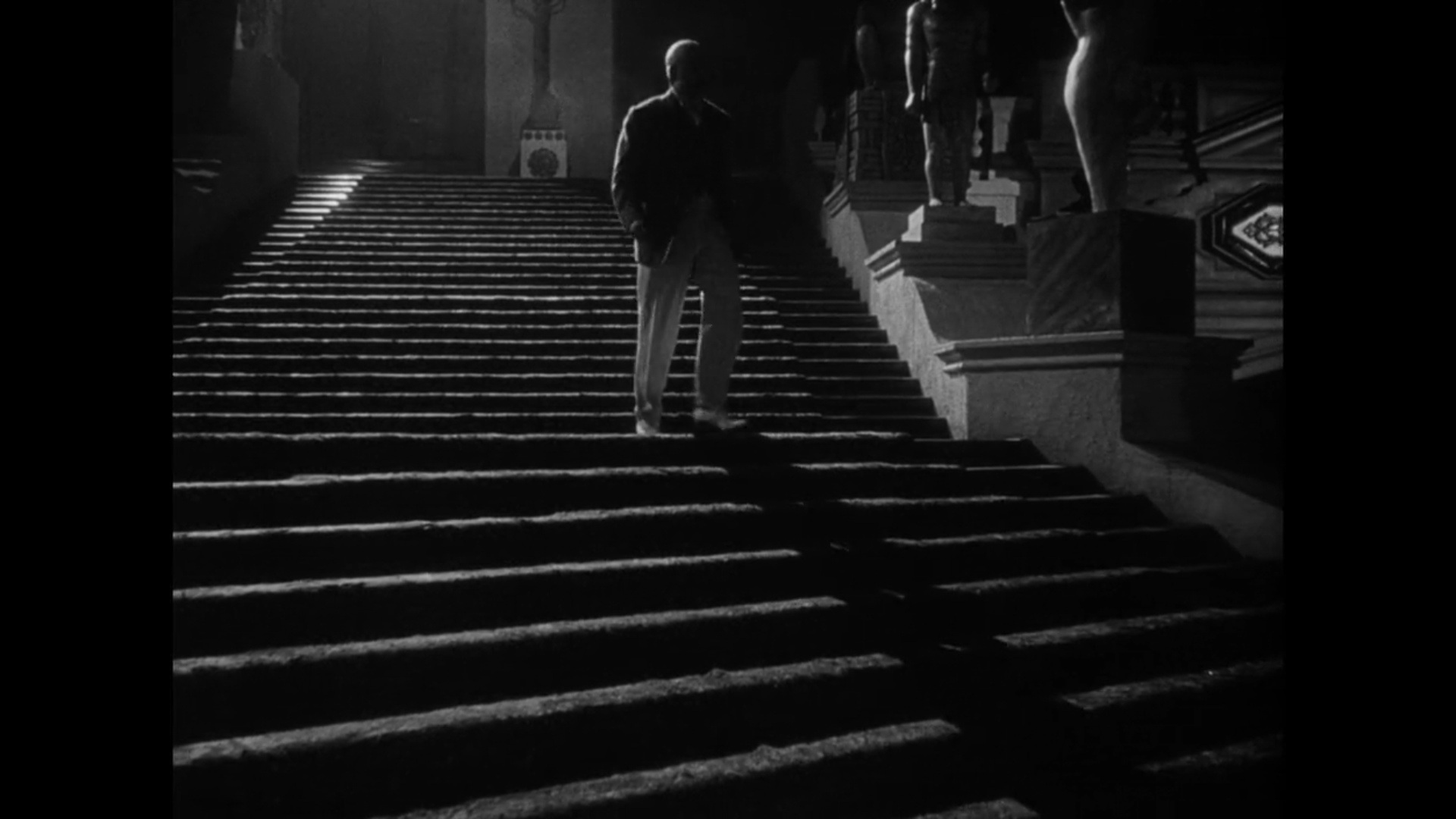
I could go on and on about how different camera angles and lighting choices help indirect characterization, but I won’t belabor the point.
Citizen Kane is a film that explores many important themes – media, power, and the meaning of happiness – and its brilliant acting, screenwriting, and cinematography allow it to tackle these topics with great impact. It is a movie that you enjoy but also one that makes you think. At the beginning, we wonder how a man so powerful ended up dying lonely and depressed. However, the puzzle of Kane’s last words is what truly guides the deep thinking of this film. “What does Rosebud mean?” is a question that leads us to explore all these themes through the lens of Kane’s life story. The intelligent representation of such heavy themes is what makes Citizen Kane one of the great American movies.